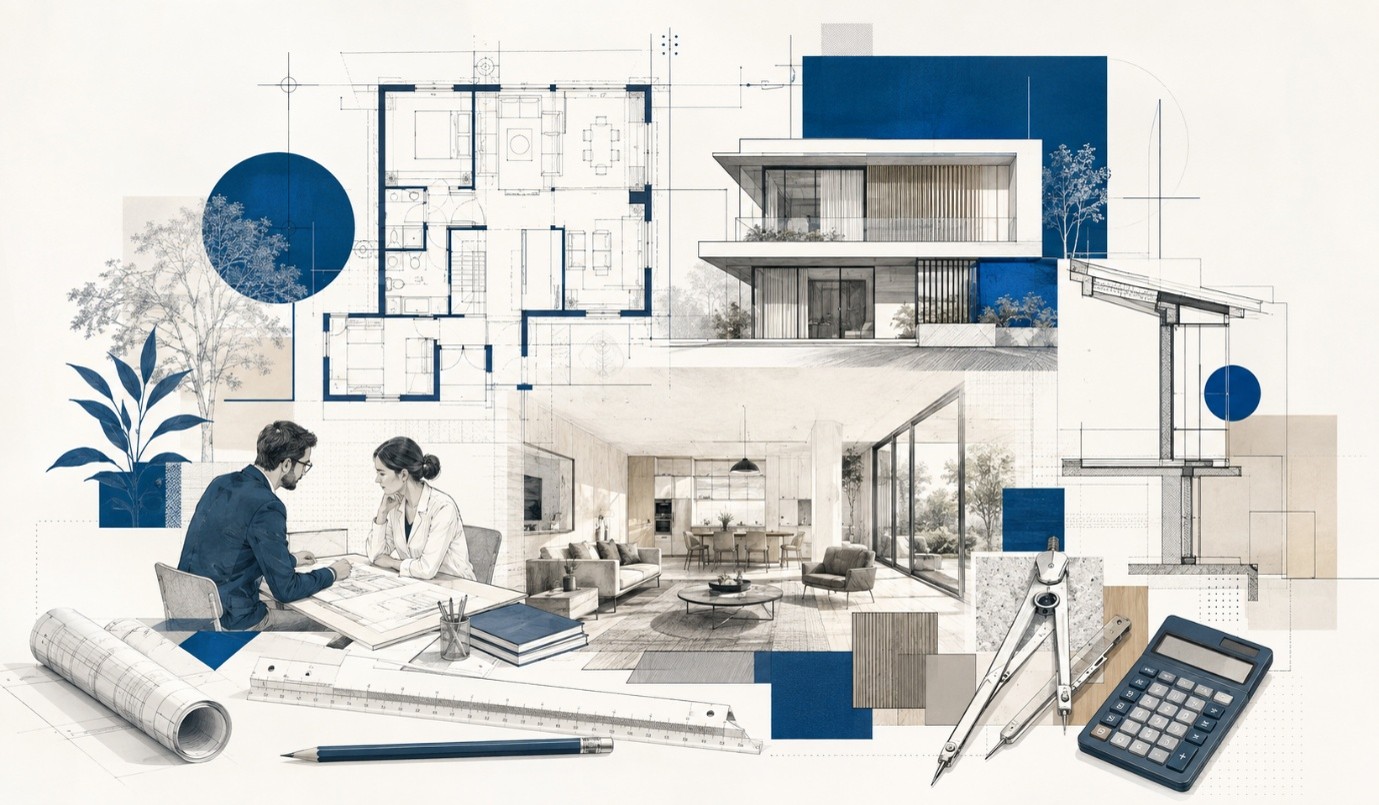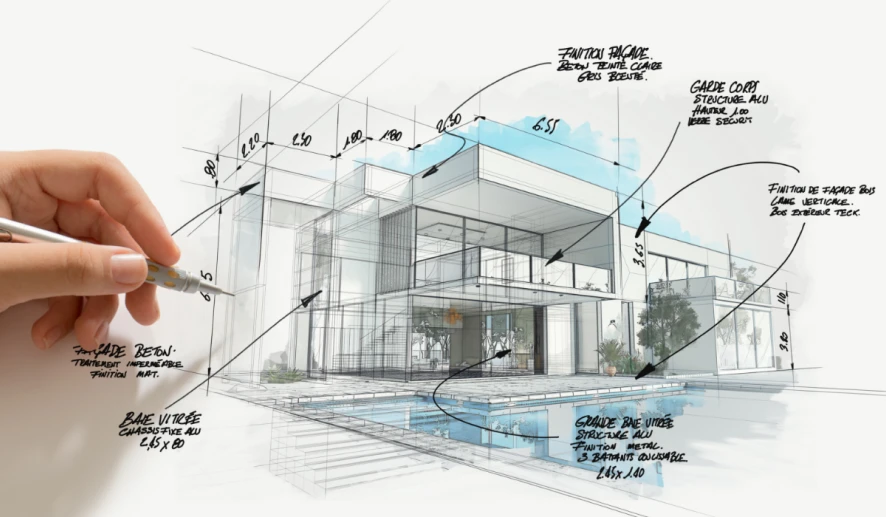




An architect could help you save money by avoiding expensive design errors. They can also help avoid costly rework, material waste and changes during construction.
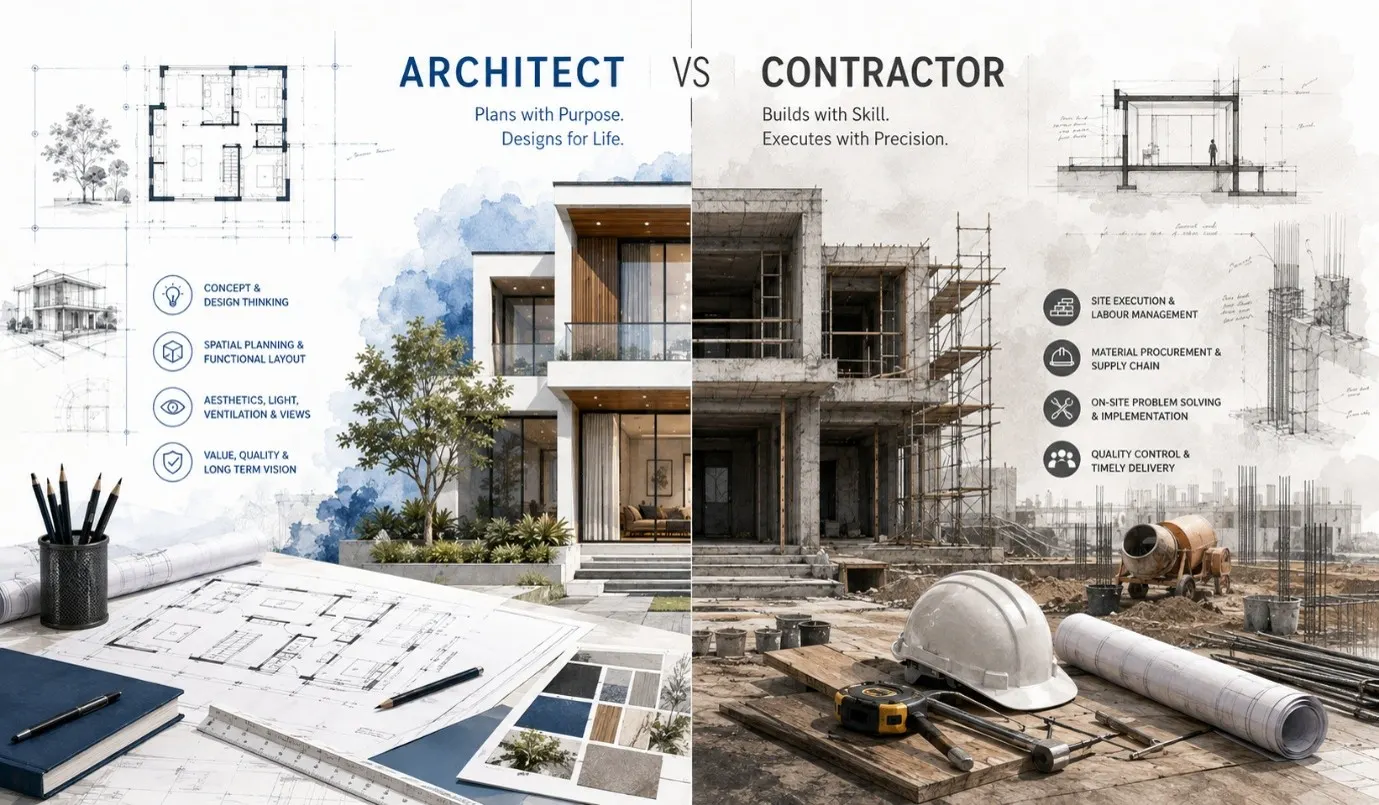
An architect and contractor have different roles. The contractor handles construction work. The architect handles design and space planning. This difference can affect your total project cost.
Understanding the Roles of Architect vs Contractor
What Is the Work of an Architect?
An architect plans and designs your space around your needs. They create practical layouts with good lighting and ventilation. They also prepare detailed drawings and work with consultants.
Choose an architect first for:
- Full design planning: An architect prepares layouts, elevations and detailed drawings.
- Better space planning: The design considers how rooms and spaces work together.
- Design coordination: The design can be coordinated with structural requirements.
- Early decisions: Design details can be decided before construction starts.
- Design changes: An architect can spot problems before they become costly site changes.
What Is the Work of a Contractor?
A contractor handles the construction work. They manage labour, materials and different trades. They also handle site issues and follow the drawings and plans.
Choose a contractor first for:
- Construction work: The contractor carries out the building work.
- Labour and materials: They manage workers, materials and different trades.
- Site supervision: The contractor manages daily work on site.
- Construction costs: The contractor can estimate costs based on the work involved.
Why Do People Choose to Construct Without Hiring an Architect?
The main reason is usually the initial cost. People may see an architect as an extra expense. They may also wonder if hiring one is worthwhile.
However, initial savings may not show the full project cost. Changes, material waste and poor planning can add extra expenses.
When Does Skipping the Architect Start to Become Expensive?
- Changes During Construction
Changes can cost more when plans are unclear. Moving a wall, window, or electrical outlet may need extra work. Good drawings can reduce rework and extra labour.
- Bad Use of Space
A space can be large but still feel poorly planned. Long corridors and unused areas can waste space. An architect can help create useful spaces without extra construction.
- Structural Decisions
The design should suit the site, soil and planned spaces. An architect can work with a structural consultant when needed. This helps the design and structure work together.
- Changes to Materials and Finishes
Tiles, flooring, doors, windows and lights need early planning. An architect can help choose materials and finishes. Early decisions can reduce changes and replacements.

- Time Spent on Decisions
Work can slow down when important decisions are pending. Workers may need to wait or redo some work. Clear drawings give the contractor a better guide.
This is why people ask if an architect can save money. The benefit can come from reducing changes, waste and rework.
So, Which Option Is Actually Cheaper?
The answer depends on the project.
An experienced contractor may work well on a simple project. However, construction experience differs from architectural design.
People often ask if an architect or contractor is better. The answer depends on the project's requirements.
The comparison between architect fees and contractor costs should cover more than the initial fee.
|
Factor |
Architect |
Contractor |
|
Design planning |
Yes |
May provide basic input |
|
Space planning |
Yes |
Limited to construction needs |
|
Detailed drawings |
Yes |
Works from drawings |
|
Structural coordination |
Works with consultants |
Executes as required |
|
Labour management |
Not usually the main role |
Yes |
|
Material execution |
Design guidance where included |
Yes |
|
Daily site work |
Depends on scope |
Yes |
When comparing architect fees and contractor costs, look beyond the fees. Rework, material changes and delays can also affect total spending.
The Architect and Contractor Should Work Together
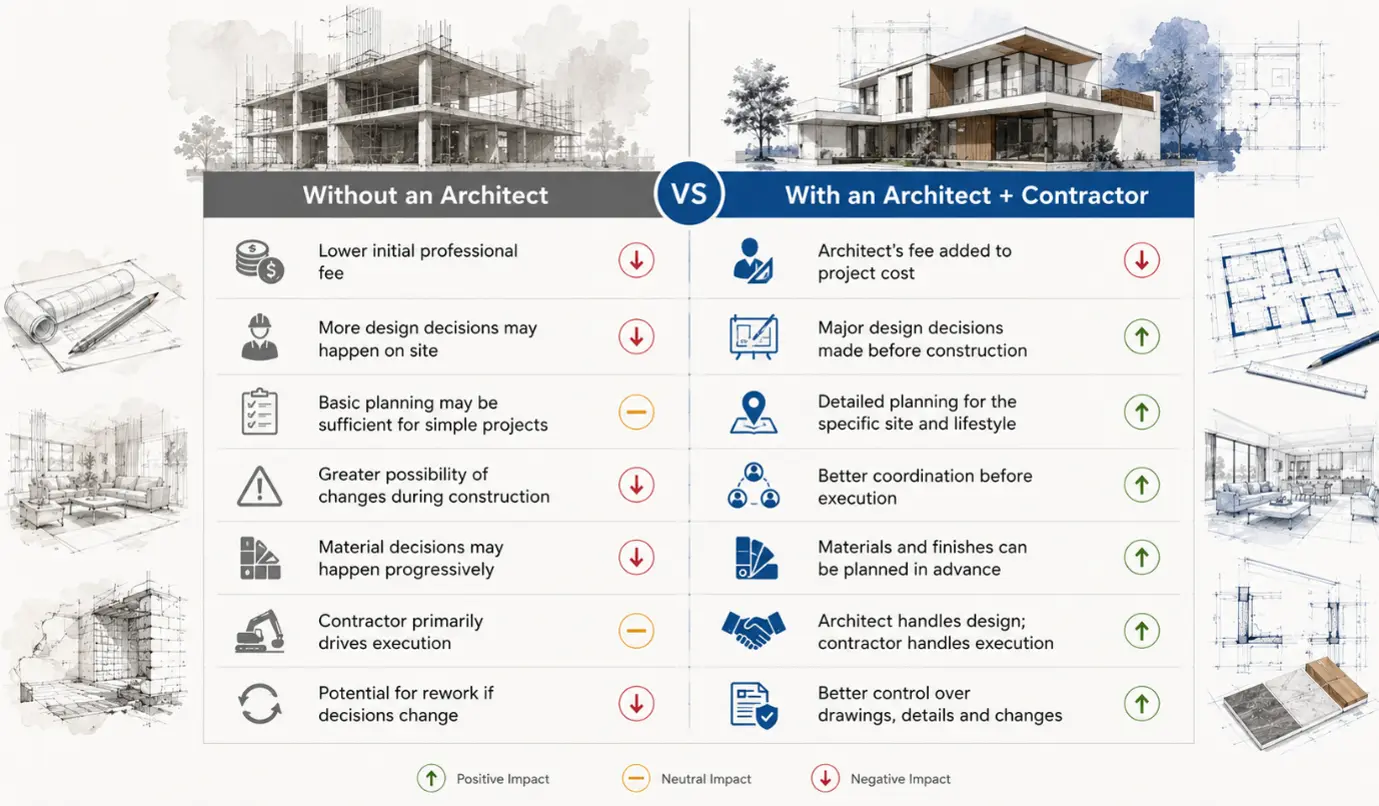
An architect and contractor have different roles. One cannot simply replace the other.
The architect handles and coordinates the design. The structural consultant handles structural requirements. The contractor turns the drawings into a finished structure.
Good communication can make construction clearer and more organised.
What Questions Should You Ask Before You Begin Construction?
Before deciding whether to hire an architect or contractor first, know who handles key design decisions.
- Who Is Responsible for Producing the Complete Design?
- Who Is Checking Whether the Spaces Work for Your Family?
- Who Is in Charge of the Architectural and Structural Drawings?
- Who Is Making the Design Decisions Before Construction?
- Who Is Helping You Understand the Cost of Changes?
Final Takeaway
The choice between an architect and contractor is not only about fees. A contractor handles construction work. An architect focuses on planning and design. Good planning can reduce rework, waste and costly changes.
KC Studio offers architectural planning, design, working drawings and coordination. As an architectural firm based in Nagpur, it focuses on clear and practical designs.
Where KC Studio Fits Into This Process
KC Studio can help plan your space from the start. This is useful for clients looking for an architect in Nagpur, Hyderabad, or anywhere across India.
FAQ
1. What Do I Need to Consider Before Employing an Architect?
Consider your project size and design requirements. Also consider how much planning your project needs. Custom spaces often need more design input before work begins.
2. Can I Get an Architect After Construction Has Started?
Yes, but some decisions may already be difficult to change. Hiring an architect early can help resolve key details before work starts.
3. Does an Architect Take Charge of the Entire Construction Project?
Not always. The architect's role depends on the agreed scope. The contractor usually manages construction work.
4. How Can an Architect Assist With Construction Decisions?
An architect can prepare drawings and help make design decisions. This gives the contractor clearer information to follow.
5. Does Every Project Require Both an Architect and Contractor?
It depends on the project and its needs. The architect focuses on design. The contractor handles construction work.
6. What Does an Architect's Fee Cover?
The fee depends on the project and services included. It can cover design, drawings, planning and coordination.
7. Who Manages Construction Work?
The contractor manages daily construction work on site. The architect focuses on design and coordination within the agreed scope.
8. Does Hiring an Architect Cost More?
Hiring an architect is an important part of the project cost. However, good planning can help reduce design changes, material waste and costly rework.