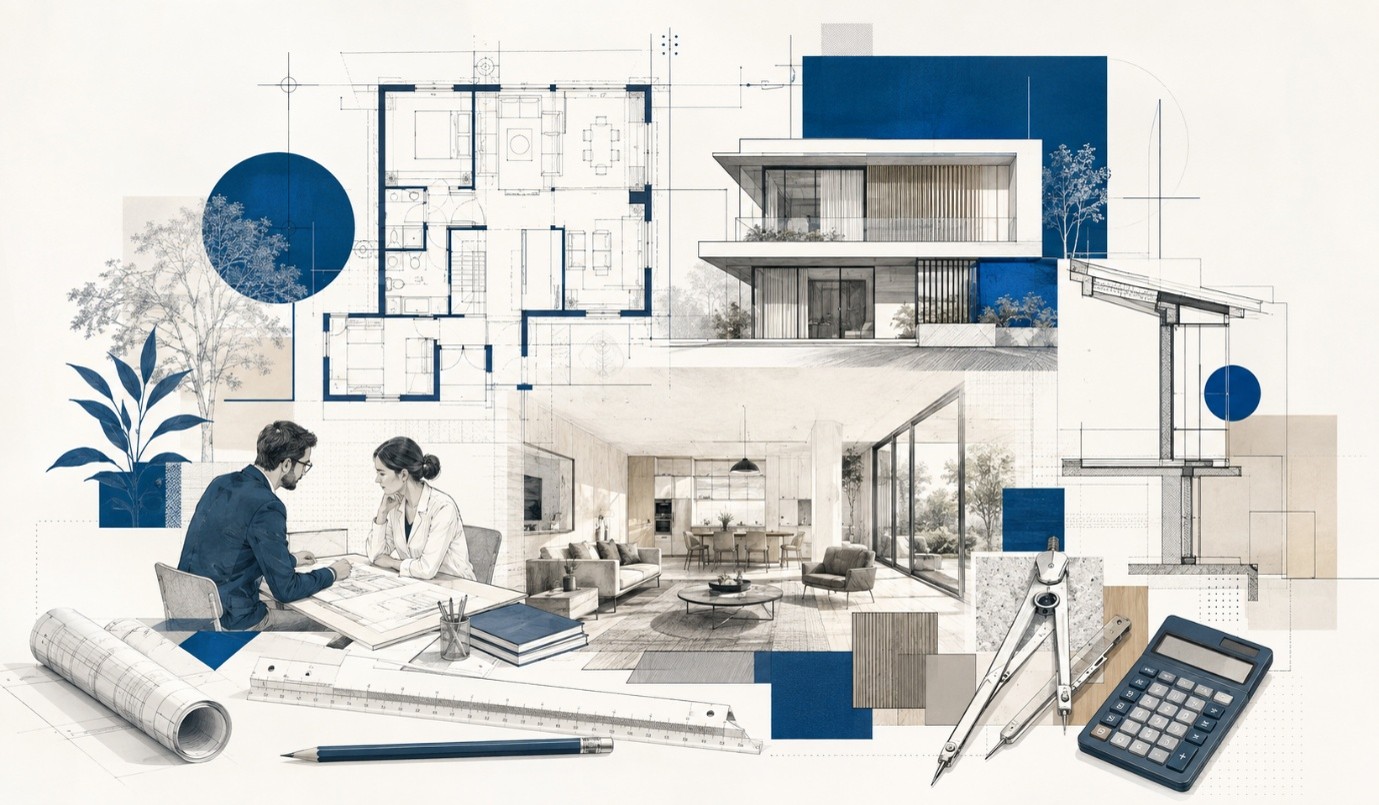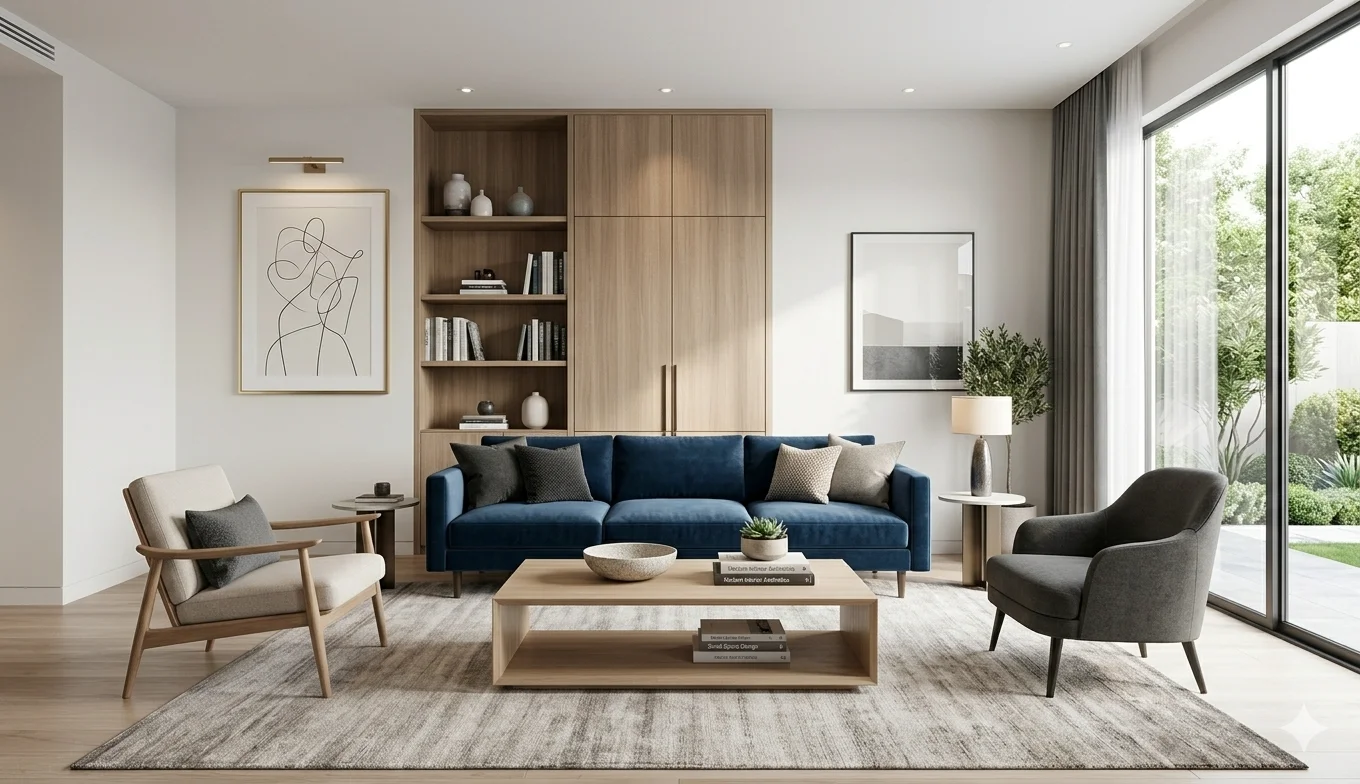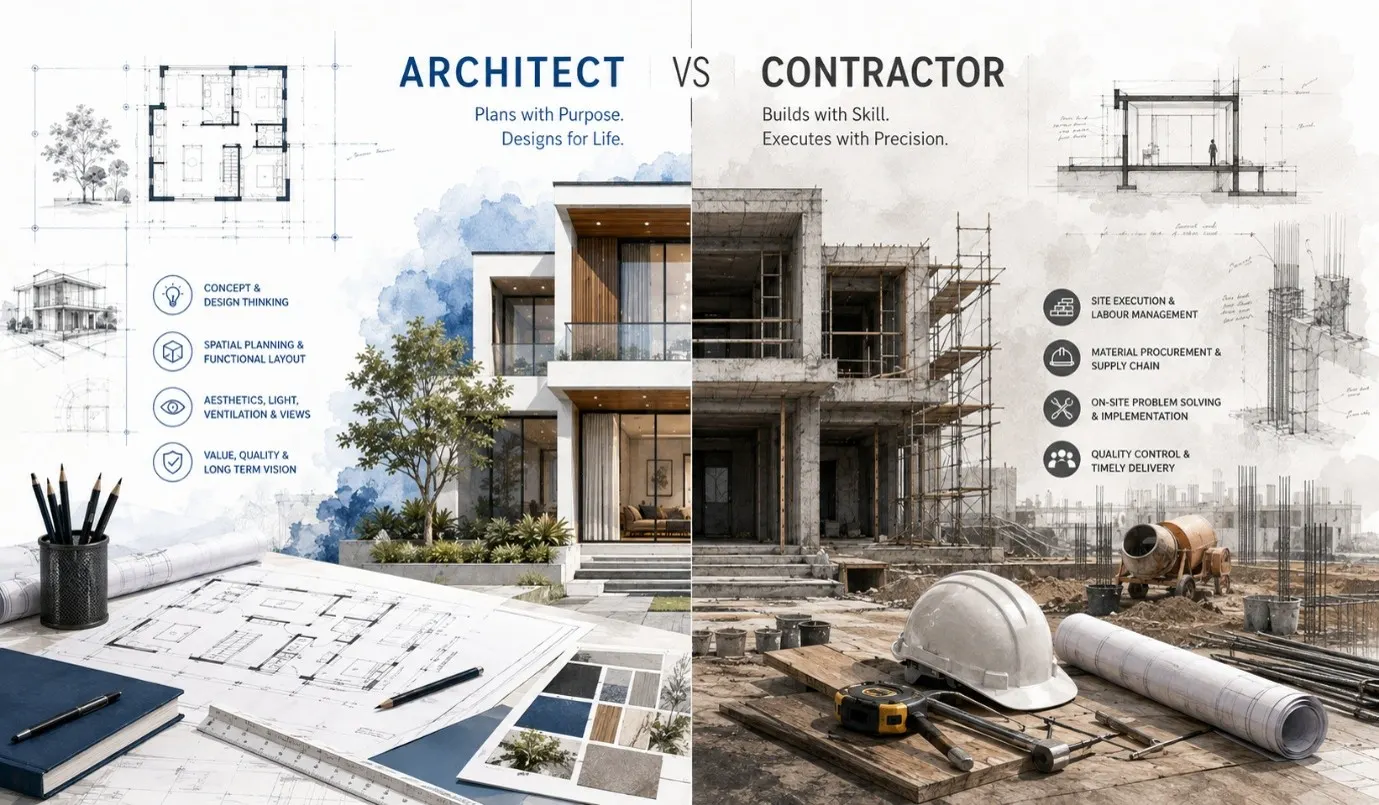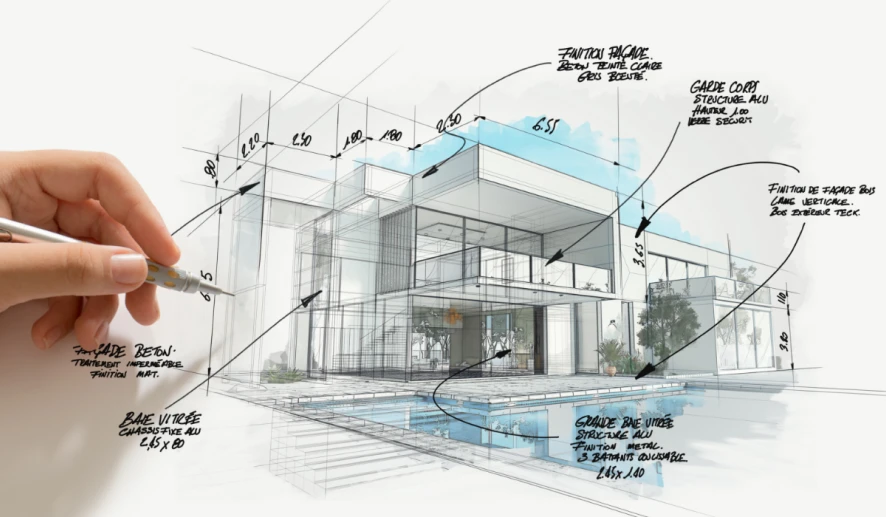



An architect designs the whole building. An interior designer designs the spaces inside it. Architects look at the site, structure, layout, natural light and airflow. Interior designers look at room layouts, furniture, materials, lighting and finishes.
The architect vs interior designer choice depends on your project. The main difference between architect and interior designer roles is scope. Architects plan the building. Interior designers make its rooms useful, comfortable and balanced.
|
Factor |
Architecture |
Interior Design |
|
Main focus |
Building design and overall planning |
Interior function and appearance |
|
Works on |
Site, building form, layout and spaces |
Rooms, layouts and interior details |
|
Structural work |
More involved |
Usually limited |
|
Space planning |
Building-level planning |
Interior-level planning |
|
Technical drawings |
Plans, sections, elevations and construction documents |
Interior and detail drawings |
|
Materials |
Building materials and external finishes |
Interior materials and finishes |
|
Lighting |
Building orientation and natural light |
Interior lighting and atmosphere |
|
Furniture |
Limited focus |
Major focus |
|
Approvals |
May support required building approvals |
Usually focused on interior scope |
|
Main goal |
Safe, functional and suitable buildings |
Comfortable, useful and cohesive interiors |
Architecture and interior design overlap in space planning and lighting. Still, each professional has a different main role.
Who Is an Architect vs Interior Designer?
An architect plans the building. An interior designer shapes how people use its spaces. This is the basic split in an interior designer vs architect comparison.
|
Who Is an Architect? |
Who Is an Interior Designer? |
|
Works on the design and planning of buildings. |
Focuses primarily on the spaces within a building. |
|
Plans the site and the building’s overall design. |
Plans how the spaces within a building will look and function. |
|
Site planning |
Space planning |
|
Building form |
Furniture layouts |
|
Spatial layouts |
Lighting |
|
Circulation |
Materials |
|
Façade design |
Colours |
|
Structural coordination |
Kitchens |
|
Natural light |
Wardrobes |
|
Ventilation |
Ceilings |
|
Building services |
Storage |
|
Landscape integration |
Finishes |
|
Overall architectural character |
Interior detailing |
|
Considers how people enter, move through and experience a building. |
Creates spaces that are functional, comfortable and suited to the people using them. |
|
Considers how the building connects with its surroundings. |
Focuses on making interior spaces practical and comfortable. |
|
Makes key design decisions before elements like furniture, flooring and wall colours are selected. |
Works on interior elements such as furniture, flooring, materials and wall colours. |
The difference between architect and interior designer comes down to scope. Architects focus on the building and its surroundings. Interior designers focus on how indoor spaces work and look.
What Does an Architect Do vs an Interior Designer?
The Roles and Responsibilities of an Architect vs Interior Designer differ based on the project scope. Architects handle building design, site planning and overall layout. Interior designers handle indoor spaces, furniture, materials, finishes and details. Their work can overlap, depending on the project scope.
|
Responsibility |
Architect |
Interior Designer |
|
Understand project requirements |
Yes |
Yes |
|
Study site conditions |
Yes |
Sometimes |
|
Plan building form |
Yes |
No |
|
Building planning |
Yes |
No |
|
Plan circulation |
Yes |
Yes |
|
Building layout |
Yes |
Sometimes |
|
Plan structural elements |
Yes |
Limited |
|
Structural coordination |
Yes |
Limited |
|
Develop building drawings |
Yes |
No |
|
Plan interior spaces |
Yes |
Yes |
|
Space planning |
Yes |
Yes |
|
Interior layouts |
Sometimes |
Yes |
|
Select interior finishes |
Sometimes |
Yes |
|
Material selection |
Yes, where relevant |
Yes |
|
Plan furniture |
Sometimes |
Yes |
|
Furniture planning |
Limited |
Yes |
|
Plan lighting |
Yes |
Yes |
|
Lighting planning |
Yes |
Yes |
|
Technical drawings |
Building drawings |
Interior drawings |
|
Coordinate consultants |
Yes |
Within interior scope |
|
Consultant coordination |
Yes |
Yes |
|
Coordinate vendors |
Sometimes |
Often |
|
Review execution |
Depending on scope |
Depending on scope |
|
Execution coordination |
May be involved |
May be involved |
An architect often handles the first concept, building plans and construction drawings. An interior designer often manages space planning, materials, detail drawings and site coordination. For a new building, start with an architect. For an existing space that needs interior updates, an interior designer may be enough.
Architect vs Interior Designer: Skills and Expertise
Architects need strong building, technical and planning skills. Interior designers need strong space planning, material and design skills. Both use creativity and technical knowledge, but in different ways.
|
Skill or Expertise |
Architect |
Interior Designer |
|
Building planning |
High |
Limited |
|
Structural understanding |
High |
Basic to moderate |
|
Space planning |
High |
High |
|
Technical drawing |
High |
High |
|
Materials knowledge |
High |
High |
|
Furniture planning |
Limited to moderate |
High |
|
Lighting knowledge |
High |
High |
|
Visualisation |
High |
High |
|
Building regulations |
Strong focus |
Relevant to project scope |
|
User experience |
Important |
Major focus |
|
Construction knowledge |
High |
Moderate to high |
|
Creative problem-solving |
High |
High |
Architecture focuses on building design, technical planning and construction. Interior design focuses on how people use indoor spaces. This includes furniture, materials and finishes. Both fields need creativity, problem-solving and technical knowledge. They use these skills on different parts of a project.
Key Differences Between an Architect and Interior Designer
The main difference is scope of work. An architect focuses on the building, its structure and overall plan. An interior designer focuses on the spaces inside. This includes layouts, materials, furniture and finishes.
|
Difference |
Architect |
Interior Designer |
|
Scope of work |
Building and overall spatial planning |
Interior spaces and user experience |
|
Structural responsibility |
More involved in structural planning |
Usually focuses on non-structural elements |
|
Project stage |
Often starts early |
Often joins during interior planning |
|
Technical drawings |
Plans, sections, elevations and construction documents |
Furniture, ceiling, joinery and interior details |
|
Approvals |
May support required building approvals |
Usually focuses on interior requirements |
|
Materials and finishes |
Building materials and selected finishes |
Interior finishes, furniture and décor |
|
Site planning |
Major responsibility |
Limited |
|
Building form |
Major responsibility |
Not usually the main scope |
|
Furniture |
Limited focus |
Major focus |
|
Interior styling |
Limited focus |
Major focus |
An architect mainly works on the building, its structure and its site. An interior designer makes the spaces inside useful, comfortable and good-looking. Their duties differ, but they can work together for a well-planned, unified space.
What Do an Architect and Interior Designer Do During a Project?
An architect and an interior designer may join a project at different stages. Their duties depend on the project needs and agreed scope.
|
Project Stage |
Architect |
Interior Designer |
|
Initial planning |
Studies the site and building requirements |
Understands the users' needs and interior requirements |
|
Concept design |
Develops the building form and overall layout |
Develops interior concepts and space layouts |
|
Design development |
Refines building plans and coordinates technical requirements |
Refines furniture layouts, materials, lighting and finishes |
|
Technical drawings |
Prepares building drawings and construction details |
Prepares interior drawings and joinery details |
|
Material selection |
Advises on building materials and relevant finishes |
Selects interior materials, furniture and finishes |
|
Consultant coordination |
Coordinates structural and building-related consultants |
Coordinates interior vendors and relevant consultants |
|
Site execution |
May review building work and design implementation |
May review interior work and design implementation |
Architects plan the building and its technical needs. Interior designers focus on how indoor spaces work and look. When both coordinate early, they can avoid design clashes and get a more consistent result.
Why Should Architecture and Interiors Be Planned Together?
Planning architecture and interiors together makes the building and its interiors feel connected. They work better as one space.
|
Design Element |
How Architecture and Interiors Work Together |
|
Windows and natural light |
Window size and placement affect how much natural light enters a space. |
|
Building orientation |
The building's direction affects how sunlight enters different rooms. |
|
Structural planning |
The structural grid can affect room sizes, proportions and furniture layouts. |
|
Façade design |
The building's exterior can influence the look and feel of its interiors. |
|
Landscape |
Landscape design connects the building with its surroundings and outdoor spaces. |
|
Materials |
Matching or complementary materials can create a natural flow between indoor and outdoor spaces. |
|
Lighting |
Early planning helps make the best use of natural light and supports interior lighting choices. |
|
Furniture and finishes |
Furniture, lighting and finishes can complement the building's overall design. |
|
Overall design |
A consistent design approach helps the building and interiors feel like one complete experience. |
Planning both together helps avoid design clashes. The spaces look good, work well and feel connected from outside to inside.
Do I Need an Architect or Interior Designer? Which Is Better for Your Project?
Hire an architect for building design, structural changes or major alterations. Hire an interior designer for room layouts, furniture, lighting and finishes. The architecture vs interior design choice depends on your project scope. For a complete project, you may need both.
|
Your Requirement |
Recommended Professional |
|
Designing a new building or planning a new house |
Architect |
|
Making structural changes or adding another floor |
Architect |
|
Planning a major extension |
Architect |
|
Getting building-level approvals |
Architect, where applicable |
|
Improving room layouts or planning furniture |
Interior Designer |
|
Selecting materials, finishes and lighting |
Interior Designer |
|
Redesigning an office or retail space |
Interior Designer |
|
Coordinating building and interior design |
Both |
|
Major renovation with interior changes |
Often both |
Choose an architect for new construction, structural renovation, extensions or changes to the building layout. Choose an interior designer for furniture planning, lighting, finishes, storage and interior upgrades. For structural changes, consult an architect or another qualified professional. Consider your project requirements before deciding which professional to hire.
Questions to Ask Before Hiring an Architect or Interior Designer
Ask about experience, scope, drawings, fees and coordination.
|
Question |
Why It Matters |
|
Have you handled similar projects? |
Checks relevant experience |
|
What services are included? |
Defines the project scope |
|
What drawings will you provide? |
Clarifies deliverables |
|
Who coordinates consultants? |
Avoids responsibility gaps |
|
Who coordinates vendors? |
Clarifies execution support |
|
How are fees calculated? |
Helps plan the budget |
|
What is the expected timeline? |
Sets realistic expectations |
|
Will you help with approvals? |
Clarifies approval support |
|
How many revisions are included? |
Prevents scope confusion |
|
Can I see similar projects? |
Helps assess design quality |
Look beyond photos of finished projects and ask about similar work. Confirm who will coordinate consultants and contractors. Most importantly, ask what the scope does not include. Clear expectations prevent confusion, delays and extra costs. These questions also help you compare professionals fairly.
Architecture vs Interior Design: Career Scope and Opportunities in 2027
Architecture and interior design lead to different careers. Your choice depends on your interests, strengths and the work you prefer.
|
Career Factor |
Architecture |
Interior Design |
|
Main focus |
Buildings and built environments |
Interior spaces |
|
Work areas |
Residential, commercial, institutional and urban projects |
Residential, commercial, retail, hospitality and more |
|
Core skills |
Planning, technical design and building knowledge |
Space planning, materials, visualisation and styling |
|
Career options |
Architect, architectural designer, planner and related roles |
Interior designer, space planner, stylist and related roles |
|
Freelancing |
Possible |
Possible |
|
Studio practice |
Possible |
Possible |
|
Technology |
CAD, BIM and 3D tools |
CAD, 3D and visualisation tools |
|
Growing areas |
Sustainable design, urban projects and digital workflows |
Sustainable interiors, smart spaces and experience-led design |
Both fields offer many career options. Choose architecture if you enjoy building design and technical planning. Choose interior design if you like creating useful, comfortable spaces. Let your interests and strengths guide you.
Architecture vs Interior Design: Industry Statistics and Trends
Both fields have room to grow in India. Construction, urban growth and demand for well-designed spaces create work in both. Their market data, however, measures different things.
|
Industry Indicator |
Architecture |
Interior Design |
|
Market data |
No single comparable India-wide market figure |
Mordor Intelligence estimates USD 35.48 billion in 2026 |
|
Professional data |
150,147 registered architects in the Council of Architecture's October 2026 data |
No equivalent single national registry |
|
Growth drivers |
Housing, infrastructure, commercial and urban development |
Residential and commercial projects, renovations and fit-outs |
|
Key trends |
Sustainable design, digital tools and integrated planning |
Smart interiors, sustainable materials and 3D visualisation |
India's home and household market is also set to grow. Deloitte projects it will reach US$260 billion by 2030.
Both fields offer chances as India's built environment grows. Architecture focuses on buildings and wider planning. Interior design focuses on useful, attractive indoor spaces. Compare market figures with care, as reports use different definitions.
How Can KC Studio Help With Your Architecture and Interior Design Needs?
KC Studio offers architecture, interior design and related services. It supports your project from first plan to final design.
KC Studio treats the building, interiors and landscape as parts of one design. Its services cover residential, commercial and other projects. The focus is on useful, well-planned spaces.
|
Your Requirement |
KC Studio Service |
|
New building design |
Architecture |
|
Home design |
Residential Architecture |
|
Commercial projects |
Commercial Architecture |
|
Interior planning |
Interior Design |
|
Space optimisation |
Space Planning |
|
Landscape requirements |
Landscape Design |
|
Vastu guidance |
Vastu Consulting |
|
Architecture and interiors |
Integrated Design |
|
Renovation or remodelling |
Architecture and/or Interior Design |
KC Studio is based in Nagpur and Hyderabad and serves clients across India. It plans architecture, interiors, materials, lighting and landscape together. This joined-up approach gives each project a consistent design.
FAQ
1. Who should I hire first, an architect or an interior designer?
For new construction, start with an architect. For interior updates to an existing space, an interior designer may be enough.
2. Can an architect and interior designer work together on the same project?
Yes. They can coordinate the building design, interior spaces and details together.
3. What happens if I hire an interior designer before an architect?
That can work for existing spaces. New construction usually needs architectural planning first.
4. Can an interior designer change the layout of a house?
Yes. An interior designer can change room layouts. Structural changes may need an architect or another qualified professional.
5. Do I need an architect for a home renovation?
You may need an architect for structural changes, extensions or major alterations. Simple interior updates usually do not need one.
6. Can an architect provide interior design services?
Yes. Some architects offer interior design, depending on their skills, experience and project scope.
7. Should I hire one firm for architecture and interior design?
One firm can coordinate both more easily, if it has the right experience for your project.
8. Who earns more, an architect or an interior designer?
Earnings vary by experience, location, specialisation, project size and whether the person runs their own practice.
9. When Should an Architect and Interior Designer Work Together?
They should work together when a project needs both building design and interior planning. A new home or a major renovation is one example.
10. Can an Architect Do Interior Design?
Yes. An architect can offer interior design if they have the right skills and experience.